Blog

Tech companies won’t become banks, but they’ll pretend to

[ad_1]

You can’t escape stories of tech companies dipping their toes into banking. This year, Google revealed it’s working on a check-clearing platform for 2020, and Facebook relaunched its own payments platform. Apple launched a credit card in partnership with Goldman Sachs’ Marcus digital bank, too. As hardware sales and ad revenues dry up, these companies could see banking as another way to make money.

Alex Drummond is MD and Partner at Boston Consulting Group and co-author of the 2019 Global Payments report. He believes that Wall Street is safe from Silicon Valley, now and forever, and that the technology industry’s moves into banking are just another way to keep us using their services and features. Apple Card, for instance, is used to “help reinforce Apple Pay,” rather than stealing Goldman’s lunch. The tell, as far as he’s concerned, is in how the cashback structure works.

On purchases from Apple and other selected retailers, Apple Card offers three percent cashback. Use Apple Pay anywhere else and you’ll get two percent, and the card itself exists mostly to funnel purchases through the card in places that don’t support Apple Pay. According to a study by Bain, cited by CNBC, Apple Pay has less than 10 percent uptake in the US, a problem for the wider iPhone ecosystem. Moonshot’s Mike Edmonds agrees, writing that the card “locks in customers via the iPhone” and “drives more uptake of Apple Pay.”

But if you can, to some extent, show how owning an iPhone will actually save or make you cash, then you’ve got another reason to buy one.

Facebook Pay: Illustration

If you want to understand how cards can engender loyalty, Drummond pointed at Uber’s card. “Uber is flying under the radar here,” he said, with a card that offers six percent cashback on gas purchases for the highest tier of Uber Pro drivers. And making such a crucial component of being an Uber driver cheaper is another way to keep them working for Uber. Especially when rival companies, like Lyft and Postmates, want to recruit them.

Drummond feels similarly about Google’s banking project, which will doubtless have deep hooks into Google Pay. Yes, Google will get lots of information to analyze, but the greater value is hooking people’s accounts to Google’s commerce systems. And, as we covered last week, Facebook Pay is also designed to keep its users and their cash rattling around its own products. This isn’t about making money on day-to-day transactions, but about keeping you inside Facebook or Google.

What’s weird about projects like Apple Card is how they swim against the tide of most banking operations. Generally, credit cards in the US either charge you a regular fee or have punitive interest charges and fines for going overdrawn. Apple’s app actively encourages to pay back more than the minimum each month to avoid incurring extra fees and won’t upsell you to (historically more profitable) loan deals. In some ways, the banks aren’t making as much money from these partnerships as they could.

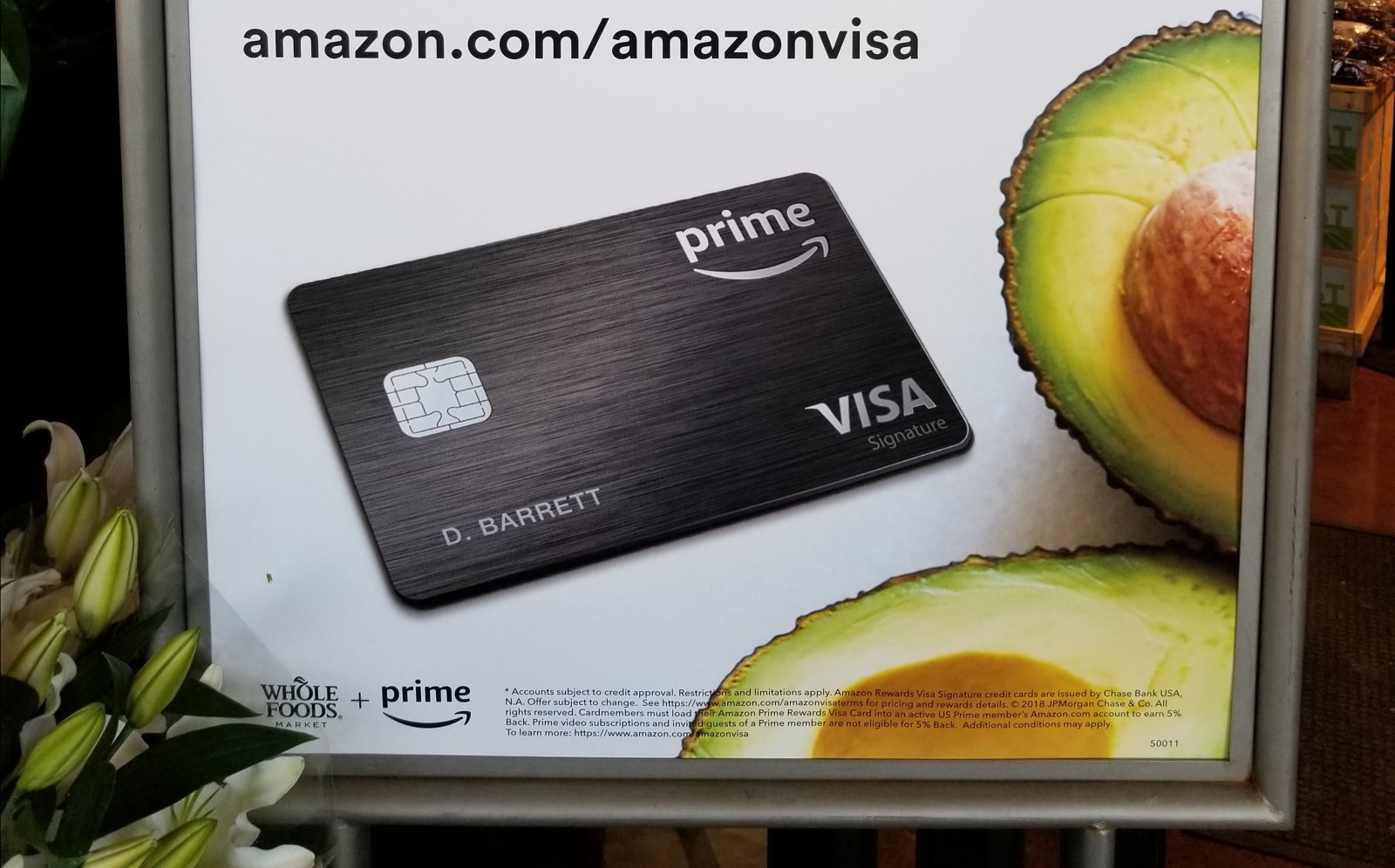
Another issue is that these banks often find themselves playing second banana to the tech companies they’re working with. The Apple Card is described in its commercials as “created by Apple, not a bank,” with no reference to Marcus, the Goldman division behind it. Similarly, there’s no JPMorgan Chase logo on the front of your Amazon-branded Visa.
Whole Foods Market Acquisition

So why do banks get involved? “They tolerate it,” says Drummond, “because it offers access to customers.” Even if these institutions can’t earn big money on these accounts, Marcus was given exclusive access to millions of American iPhone owners overnight. And with an advert for Apple Card on every iOS wallet, the bank earns millions of dollars in free advertising. Goldman is happy, too, telling CNBC that it had “the most successful credit card launch ever.”

There’s always a risk that these tech companies will spend a few years learning how to run a bank and then cut the real banks out of the picture. Drummond doesn’t think it’s likely because of the levels of regulation that banks have to abide by, something tech companies hate to do. Plus, the risks of becoming a “balance sheet business” is something few businesses want to do.

If you’re curious about what a “balance sheet business” is, it’s all about how companies hold their money. A lot of businesses don’t like to hold a lot of cash in their checking accounts because they want that money for investments. Banks, on the other hand, are obliged by law and practice to hold a good chunk of deposits for their customers to access at any time.

And when those two forms of business come into contact with each other, the result can be pretty chaotic. Drummond cited the example of PayPal Credit, in which the (ostensibly) tech company began offering lines of credit to customers. Suddenly, it had to hold large quantities of cash and debt on hand, which investors would have preferred to put to use elsewhere.

Back in 2017, Motley Fool said that PayPal was forced to hold up to half of its cash to serve those customers. Shareholders were getting antsy about what PayPal could be doing with that cash, and so in mid-2018, they forced PayPal to sell its credit business to Synchrony Financial, a real bank. Drummond believes that no tech company will attempt to repeat PayPal’s mistake.

Instead of replicating Paypal’s missteps, Google’s check-cashing service, due for 2020, will probably help you get your cash faster. And Facebook will try to hook you into its network to buy things on Instagram and split bills with your friends. If the best way to keep you within their ecosystem is to partner with a Wall Street bank, then that’s what they’ll do, even if it means half-pretending to be a bank themselves.

Image Credits: Facebook Pay (Chesnot via Getty Images), Amazon Visa (Smith Collection/Gado via Getty Images).

[ad_2]

Source link

Samsung made a ‘Star Wars’ Galaxy Note 10+ for Kylo Ren fans

[ad_1]

Do be ready to hunt the phone down and pay a hefty sum. The Star Wars variant will reach 15 markets (including the US, UK, France, Germany, Hong Kong and Spain) starting December 10th. In the US, it’ll be available on December 13th in unlocked form for $1,300 at Amazon, Samsung and some Best Buy and Microsoft stores. Samsung isn’t asking you to pay a large premium over what it would cost to get plainer versions, then. The challenge may boil down to getting one before supply runs out — you just know people will try to flip the Star Wars Note 10+ on auction sites if it becomes hard to find.

Samsung Galaxy Note 10+ 'Star Wars' Special Edition bundle

[ad_2]

Source link

Nintendo’s snap-on Switch Lite case arrives in the US on December 8th

[ad_1]

If there’s a disappointment, it’s that the case is only available in gray fabric. Your Switch’s bright colors will be hidden until you’re ready to play. It still beats having to endure a scratched screen or a scuffed casing, and the minimalism might be a positive if you don’t room for much more than the Switch Lite itself.

[ad_2]

Source link

Deezer’s lossless audio finally comes to Android, iOS and the web

[ad_1]

The HiFi tier is normally $15 per month, although Deezer hopes to reel you in by offering it for free for the first 90 days if you sign up before the end of 2019. The challenge, as always, is the competition. Services like Tidal and Qobuz have their own high-quality options that may be enticing, and that’s provided you’re itching for higher-quality audio in the first place. If you’re not about to venture beyond the earbuds that came with your phone, you probably won’t get much benefit from FLAC in the first place.

[ad_2]

Source link

Amazon cuts the price of the Google Pixel 3a to $299

[ad_1]

We saw the Pixel 3a on sale for $349 last month, but the $100 drop to $299 means it’s never been cheaper. Similarly, the bigger Pixel 3a XL reached $429 previously, but is now on sale for $379.99 (a discount of $99.01).

Not all color variants are enjoying those big discounts, though. The Just Black Pixel 3a and the Clearly White and Purple-ish versions of the Pixel 3a XL are currently the cheapest. Although, if you’re really keen for a black Pixel 3a XL, you can pick that one up for a still-discounted $399.

Google has begun teasing its own Black Friday deals, which includes a similar sale on the Pixel 3a and a hefty $200 discount on the Pixel 4. However, if you don’t want to wait until next week, Amazon has you covered.

Buy Google Pixel 3a with 64GB Memory on Amazon – $299

Buy Google Pixel 3a XL with 64GB Memory on Amazon – $379.99

[ad_2]

Source link

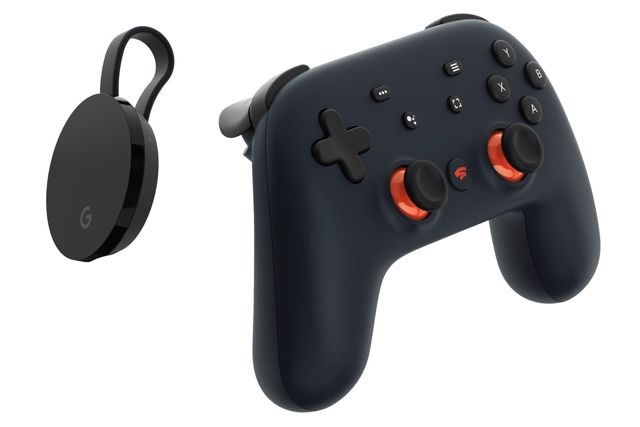
The Morning After: Google Stadia’s launch game line-up gets a big boost

[ad_1]


The new list includes ‘Metro Exodus,’ ‘NBA 2K20’ and ‘Football Manager 2020’.Google Stadia’s launch line-up gets a 10-game boost

After announcing its cloud-streaming Stadia game service would launch with just 12 titles, Google has nearly doubled that number, a mere day ahead of launch. The service will now arrive with 10 additional games, bringing the total to 22. That’ll include Football Manager 2020 and NBA 2K2020, giving Stadia a couple of the sports titles it was completely lacking before. In comparison, Microsoft is launching its xCloud preview with well over 50 titles.

The full, updated line-up is right here.


But is it an actual Mustang?
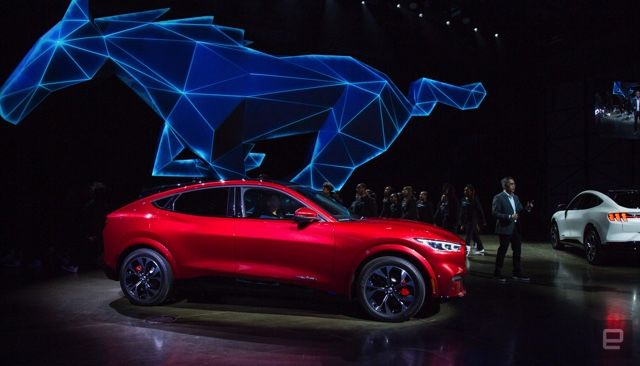
Ford’s Mustang Mach-E straddles the world of EVs, SUVs and muscle cars

Ford’s new electric vehicle is the Mustang Mach-E — but it’s not entirely a Mustang. It’s more like a crossover with hints of Mustang design. Ford seems to have a version of the Mach-E for every type of driver. It’ll be available in five trim models starting at $43,895 and will roll into showrooms in late 2020. The First Edition (270-mile range at $59,900), Premium (300 miles at $50,600) and GT (235 miles at $60,500) showing up on the road first. The California Route (300 miles at $52,400) and Select (230 miles at $43,895) will both land in early 2021.

Ford famously announced it would stop selling cars in the United States — except for the Mustang, which continues to be a hit for the automaker. The result is Ford’s first big EV — an SUV with a Mustang badge. Read on for Roberto Baldwin’s report.


This may be more about winning tariff exemptions than anything else.
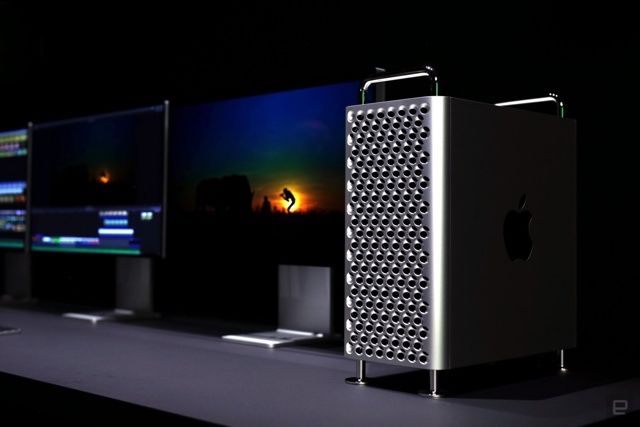
President Trump will visit Apple’s Mac Pro factory on November 20th

The White House has confirmed that President Trump will visit Apple’s Mac Pro factory in Austin, Texas, on November 20th, backing up rumors of an impending tour. It’s not clear if Tim Cook or other Apple executives will be present, but it wouldn’t be surprising given the optics. Apple wants to be seen as having the Trump administration’s support, while Trump wants to be seen supporting American jobs.

For Apple, though, there’s an extra level of urgency. The next big round of US tariffs on China is poised to take effect on December 15th, and it could easily raise the cost of selling phones, laptops, monitors and other mainstays of Apple’s product lineup.


It’s trying to reduce dissent by silencing communication.
Iran shuts down nearly all internet access in response to fuel protests

The Iranian government has shut down nearly all internet access in the country amid mounting protests that began over a 50-percent hike in fuel prices and now encompass wider dissent. There are pockets of access that have let people show what’s happening on the ground, but they’re rare. Phone calls abroad still work, but those are also closely monitored. The government hasn’t formally acknowledged the internet shutdown.

But wait, there’s more…


The Morning After is a new daily newsletter from Engadget designed to help you fight off FOMO. Who knows what you’ll miss if you don’t Subscribe.

Craving even more? Like us on Facebook or Follow us on Twitter.

Have a suggestion on how we can improve The Morning After? Send us a note.


[ad_2]

Source link

Canadian court issues first ever ISP order to block a piracy website

[ad_1]

Many Canadian ISPs, including Bell, Rogers and Videotron, also function as cable providers and in some cases, broadcasters. Bell Canada, joined later by Rogers, started pushing Canada’s regulator, the CRTC, to create a blacklist of sites that let people download pirated TV shows and movies. All ISPs would then be required to block such sites.

The CRTC rejected that idea, so the ISPs filed a lawsuit. Despite arguments to the contrary, the judge ruled that the decision wouldn’t jeopardize net neutrality or freedom of expression. ISPs have thus been ordered to block access to GoldTV within 15 days.

Ontario-based TechSavvy was one of the few ISPs to oppose the measure, saying it wouldn’t be effective or appropriate. The company noted that subscribers could easily go around the block with VPN tech and that it could lead to a slippery slope that would put an undue enforcement burden on ISPs.

“If the plaintiffs were successful in obtaining a site-blocking order in this case, there is no question that they would use it as a precedent to obtain other site-blocking orders, whether in respect of copyright infringement or otherwise,” it said. “TekSavvy could be faced with hundreds and even thousands of websites to block and monitor, exponentially increasing the costs of operating and maintaining a site-blocking system and overwhelming TekSavvy’s capacity.”

About 70,000 Canadians submitted comments and signed a petition against ISP overreach, aided by the Vancouver-based Open Media organization. “It’s a slippery slope,” representative Marie Aspiazu told the CBC earlier. “Once you have the government having control of what we can see or not see, it becomes problematic.”

[ad_2]

Source link

Google Stadia will have 10 more games at launch

[ad_1]

Google took some heat with the initial, very sparse launch list of 12 games, especially considering that Microsoft is launching its xCloud preview with well over 50 titles. Harrison explained on Twitter that “we were perhaps a little conservative in our forecast last week and (most importantly) our partners did an awesome job getting last few kinks ironed out and through testing.”

Considering the list of missing features and other launch info revealed during a Reddit AMA, this is a shot of good news for the platform. Google also said that Samurai Showdown will join Destiny 2 as a free game on the platform, which is set to launch tomorrow.

Games initially announced:

  1. Assassin’s Creed Odyssey
  2. Destiny 2: The Collection (free with Stadia Pro subscription)
  3. Gylt
  4. Just Dance 2020
  5. Kine
  6. Mortal Kombat 11
  7. Rise of the Tomb Raider
  8. Red Dead Redemption 2
  9. Samurai Shodown (free with Stadia Pro subscription)
  10. Shadow of the Tomb Raider
  11. Thumper
  12. Tomb Raider 2013

Games added on Sunday, two days before the November 19th launch:

  1. Attack on Titan: Final Battle 2
  2. Farming Simulator 2019
  3. Final Fantasy XV
  4. Football Manager 2020
  5. Grid 2019
  6. Metro Exodus
  7. NBA 2K20
  8. Rage 2
  9. Trials Rising
  10. Wolfenstein: Youngblood


[ad_2]

Source link

Stanford’s new tech-laden hospital includes pill-picking robots

[ad_1]

The pharmacy will include robots that pick pills and pack them in backs, with other robots delivering them to dispensing stations. This frees up the humans for more involved tasks. Another 23 automated guided vehicles, meanwhile, help with delivering laundry and taking out the trash. Sensors track both equipment and staff in real time to keep tabs on inventory. Doctors and nurses alike can monitor multiple patients from one location (with alerts going directly to locked-down mobile devices), while MRI scanners and other gear will integrate with each other.

Stanford told the Wall Street Journal that the hospital is designed to be upgrade-friendly. It might not need an overhaul just to accommodate new tech. The infrastructure could move to 5G wireless if necessary, for instance. An upcoming test will use an AI system with depth and thermal sensors to boost patient safety.

There are questions about the price of all this tech. The new facility cost $2.1 billion to make. That’s a lot even for a school like Stanford, and there’s no guarantee the tech will work as smoothly as promised. Stanford Health Care CIO Eric Yablonka stressed that this wasn’t a case of “tech for tech’s sake,” however, and believed that the the sheer amount of automation could improve productivity for (frequently overworked) hospital employees. The university does plan to study the care quality and financial effectiveness of the hospital, though, so it could serve as a useful test case for both Stanford and other hospitals.

[ad_2]

Source link