At its D23 event this weekend, Disney is revealing a lot more about its plans for the Disney+ streaming service and has confirmed several new Marvel TV shows that are on the way. In addition to ones we’d heard about like The Falcon and Winter Soldier, Loki, Wandavision, Hawkeye and What If…?, MCU head Kevin Feige announced it’s filling out “Phase Four” with other new shows including Ms. Marvel, She-Hulk and Moon Knight. According to Feige, Kamala Khan, aka Ms. Marvel will appear in MCU films in addition to her show.
Beyond Marvel, Disney+ also brought out Hilary Duff to announce she’s returning as Lizzie McGuire in an all-new series for the service, and flashed a trailer for Jeff Goldblum’s National Geographic show. Later, we saw a trailer for The Mandalorian, as well as news of a new Star Wars show where Ewan McGregor will return as Obi-Wan Kenobi. Other trailers shown at the event included Lady and the Tramp, High School Musical: The Musical: The Series and Kristen Bell’s Encore reality show.
We got an early look at the service, check below to see some of the new trailers and show logos or read through our hands-on experience right here. Disney+ launches November 12th at a price of $6.99 per month.
In the letter, obtained by Wired and published Friday, members of the council express to the company that “There have been no advance heads-up of Twitter’s policy or product changes to the council, leaving many of us to have no prior warning or let alone knowledge when answering press and media inquiries.” The members said the lack of communication is “embarrassing.” While not ever member of the council signed on to the letter, those that did have requested a meeting with Twitter CEO Jack Dorsey to discuss a vision for the council’s role within the company going forward.
Twitter first formed the Trust and Safety Council in 2016 following years of complaints about abuse taking place on the platform. The plan seemed to work for a time, as Twitter reported targeting and stamping out 10 times as many abusive accounts in 2017 as it had in the year prior. However, it seems as though the company has moved away from relying on its Trust and Safety Council when making decisions on how to change the platform.
At the center of the case is the Captions feature the Amazon-owned company announced last month. The feature uses machine learning to allow Audible users to transcribe an audiobook into text. Since it announced Captions, Audible has positioned the feature as a student aid. However, the company also plans to make it available to subscribers. From the perspective of publishers, audiobooks have separate licenses from ebooks, which they claim Amazon has not secured.
“Audible Captions takes publishers’ proprietary audiobooks, converts the narration into unauthorized text, and distributes the entire text of these ‘new’ digital books to Audible’s customers,” the lawsuit reads. “Audible’s actions — taking copyrighted works and repurposing them for its own benefit without permission — are the kind of quintessential infringement that the Copyright Act directly forbids.”
In response, Amazon is likely to argue that an AI-generated transcription constitutes an original work, even if what it creates is nearly identical to the original text. If the lawsuit escalates to the point where a judge must rule on it, it could become a precedent-setting decision on AI-created works.
As The Verge notes, this isn’t the first time Amazon has incited the ire of publishers over a planned transcription feature. A decade ago, alongside the Kindle 2 the company introduced a text-to-speech feature that allowed the e-reader to transcribe an ebook into audio. The issue then, as it is now, was that Amazon didn’t agree to pay for both ebook and audiobook rights. The company eventually relented and allowed major publishers like Random House to disable the feature. This time around, the stakes appear much higher, and Amazon has more clout than it has had at any point in the past.
Many smart appliance makers’ apps still require that you tap buttons to control your home, but not LG’s. It’s introducing Google Assistant-powered voice control to its ThinQ app (previously SmartThinQ) to steer all its connected appliances, whether it’s an oven, fridge or washing machine. Yes, you can already use Assistant outside of the app, but this gives you more flexibility — you have both voice and manual control in a central place. You could check the exact time left on the washer while telling the AC to set a new temperature.
The company is only testing the feature in its iOS app so far, and stressed that there’s no guarantee Collections will be widely available. They “may or may not become permanent features,” a spokesperson told TechCrunch. Netflix’s disc-based service already has a similar Collections feature, although it clearly doesn’t have the instant gratification of streaming.
It seems like it may be just a matter of time before Collections are more widely available, though. As initial discoverer Jeff Higgins found, Collections are billed as an “easy way” to find shows you’d like. It’s all too common to be overwhelmed by choices on streaming services like Netflix. If this helps you start watching sooner instead of browsing endless automated suggestions, you may be more likely to come back instead of drifting toward other services.
Throughout the interview, Samsung and Sony were frequent touchpoints for the executive, with Lau noting, “We want to benchmark the image and sound quality against the most premium quality products currently available in the market…” Notably, Lau didn’t mention LG in his image quality comparison, likely due to the fact the OnePlus TV sets will feature QLED panels. LG’s high-end OLED TVs are currently the highwater mark when it comes to TV image quality. However, they cost significantly more than their QLED counterparts.
Upgrade to an unparalleled viewing experience with a 55″ QLED display on the OnePlus TV 📺
Confirming recent rumors, Lau also said the OnePlus TV features a custom user interface on top of Android TV. He added the company is “optimizing” the OS “very deeply.” Based on Lau comments, it’s not clear if OnePlus has limited its tinkering of Android TV to skinning the user interface or if it has created a new fork of the OS. OxygenOS, the software that comes pre-installed on the company’s smartphones, is a fork of Android.
Additionally, Lau noted the OnePlus TV would integrate with the company’s smartphones to offer an experience that’s “much more smooth and more seamless” than the official Google Remote Control app Android TV owners can download from the Play Store. One feature Lau detailed will allow OnePlus users to input text on their TV through their phone. It’s worth noting that a variety of companies, including NVIDIA, already offer this type of cross-platform functionality on their Android TV platforms.
Moving forward, Lau noted one of OnePlus’ goals with its TV is to evolve into a smart display platform. Similar to devices like the Google Nest Hub and Lenovo, the company envisions its TVs providing morning briefings, calendar reminders and more to owners. “I don’t have an interest in doing a traditional TV like others,” said Lau. He was, however, quick to note the company’s first TV is unlikely to include those features at launch.
OnePlus is likely to drip-feed additional details about the OnePlus TV in the days and weeks to come ahead of the company’s official announcement, which is set for sometime this September.
While Tesla does have a factory in Shanghai, it’s not expected to start producing cars until later in 2019. Until it ramps up in earnest, the company will have to import EVs. BMW and Mercedes, meanwhile, ship many SUVs to China from American plants.
The new round of tariffs also slaps 5 percent more on US crude oil and soybean imports starting September 1st.
The timing for the car tariffs isn’t coincidental. It lines up with a planned US action that would apply tariffs to phones, laptops, consoles and other devices on the same day. China wants to show that US tariffs won’t go unanswered, and it’s likely hoping to use this as a bargaining chip for planned negotiations in September. If there’s no progress, though, the tariffs could both hike prices for tech sold in the US (a large amount of it being made in China) and hurt US car sales in China.
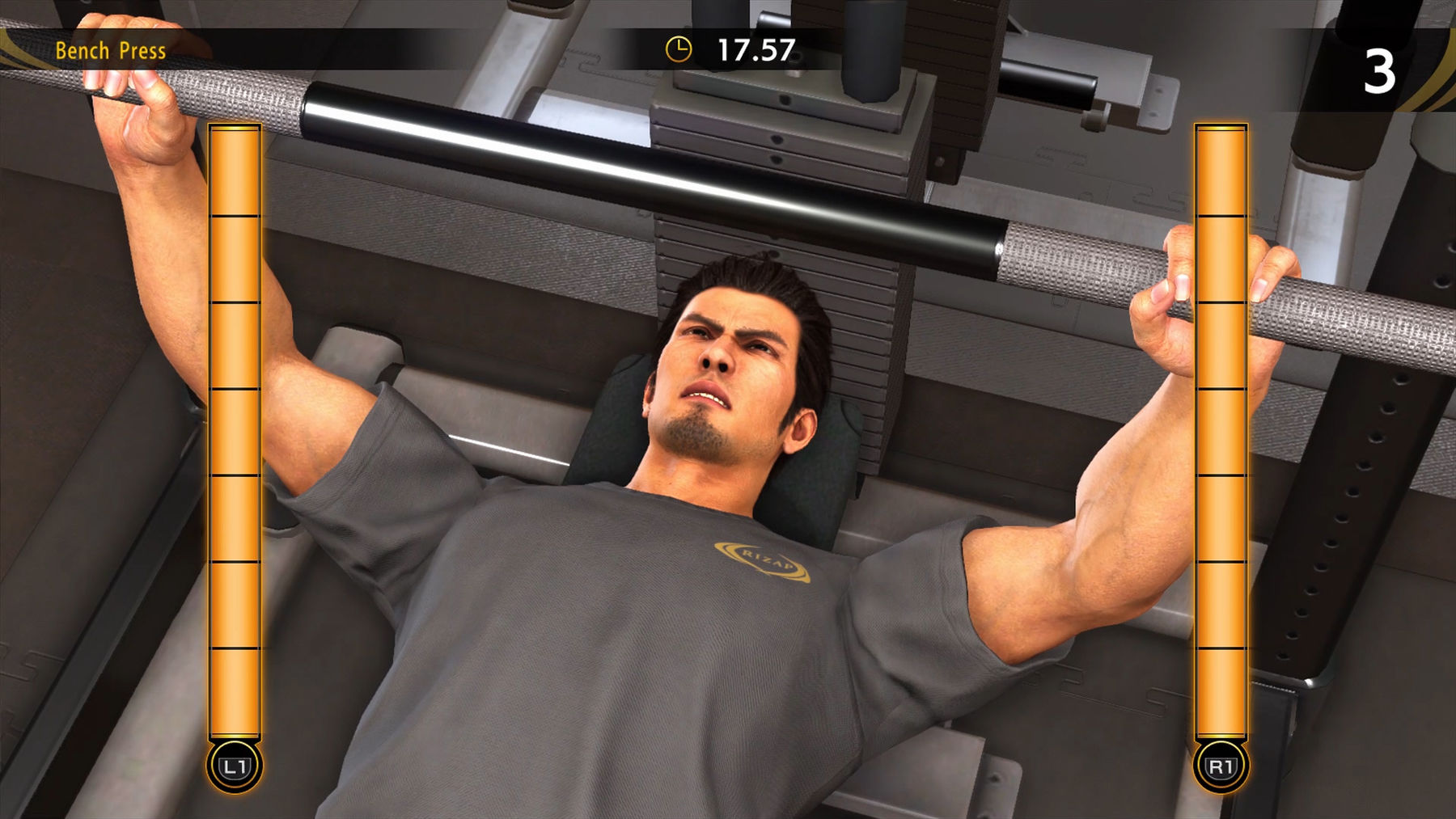
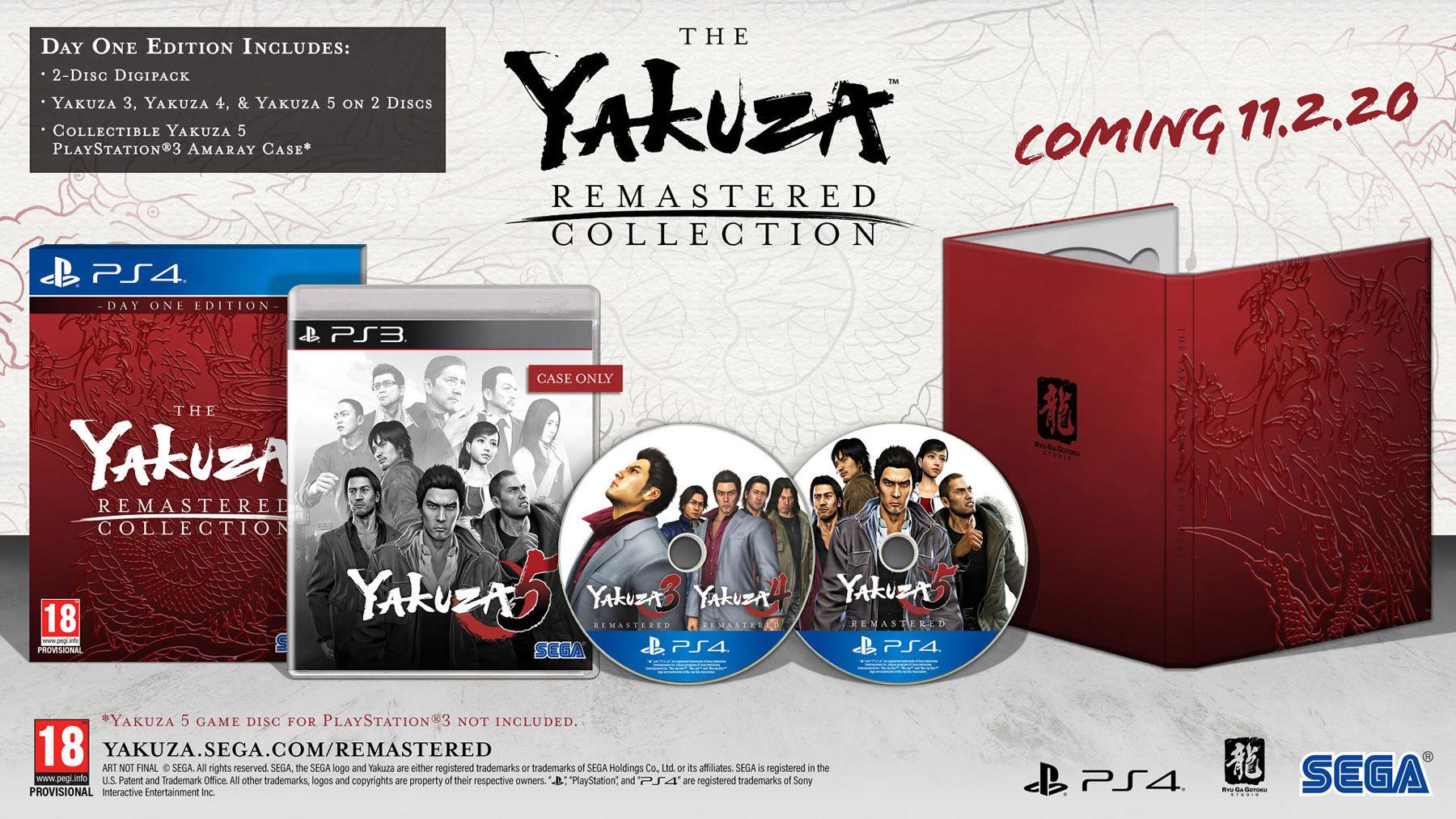
At Gamescom 2019, Sega announced that three remastered Yakuza games — originally numbered 3, 4 and 5 — will be released in the West as The Yakuza Remastered Collection. The first instalment, Yakuza 3, is available right now if you buy the $60 bundle. Yakuza 4 will follow in October and Yakuza 5 will round out the set next February. If you haven’t been following the Yakuza franchise, you might be wondering why RGG Studio is remastering three titles from PlayStation 3 era in quick succession.
But make no mistake: these updated versions are important.
There’s a subset of Yakuza fans who have played every release on its original hardware. They discovered the series early on and have been championing its mix of serious, hardboiled drama and comically strange side-stories ever since. There’s another group, though — based primarily in the West — who started with the outstanding PS4 prequel Yakuza 0 in early 2017. The game’s place in the larger story meant it was the perfect starting point for those who had heard about, but never played, a Yakuza adventure.
Many of these people, understandably, then wanted to catch up and play the rest of the series without booting up a PS2 or PS3. RGG Studio seemed to anticipate this and launched Yakuza Kiwami, a remake of the original Yakuza, in the West later that year. But here’s where things get messy: the company had already developed and releasedYakuza 6: The Song of Life for longtime fans in Japan. The game, which wrapped up Kiryu’s saga, was brought to the West in spring 2018.
Older fans dove into the title, while those who had started with Yakuza 0 were left with a conundrum: Play Yakuza 6 which, despite offering a story recap, probably wouldn’t have the intended emotional impact? Or wait for further remasters that would, eventually, offer a narrative bridge? It’s impossible to say exactly how many people chose to wait. But those players exist, and it must have had an impact on Yakuza 6 sales in the West.
Yakuza 6
A remake of Yakuza 2, aptly named Yakuza Kiwami 2, was released in the States four months later. The crowd that had started with Yakuza 0 were closer to ‘current day’ Yakuza, but still lagged behind older fans.
RGG Studio is therefore, trying to juggle three distinct groups: a community in Japan that typically gets its releases before everyone else, the fans elsewhere who have finished everything up to Yakuza 6, and the relative newcomers who still have four mainline games to play.
The company has had to grow and change, unsurprisingly, to handle multiple projects and release dates. “Yeah, [if you] consider the last 10 years, from Yakuza 3 to now, of course the whole society of RGG Studio got bigger and more efficient so that [we’re] able to handle several projects at the same time,” Daisuke Sato, producer at RGG Studio said.
The Yakuza Remastered Collection should, at long last, bring the entire community together. “The majority of the fanbase is now fans that started out at Yakuza 0 on PS4,” Sato said, “and being able to finally close the gap between Kiwami one, two, and (Yakuza) 6 on the PlayStation 4 for these new fans that came on during the PS4 generation, is a big relief.”
There will be a physical version of The Yakuza Remastered Collection, too.
Unsurprisingly, RGG Studio is working on a new, currently unnamed Yakuza title (for the sake of this article, let’s call it Yakuza 7) to take advantage of this convergence. We know little about the title other than its protagonist is a wild-looking ruffian called Ichiban Kasuga who first appeared in the card game spin-off Ryū ga Gotoku Online.
Sato wants to reassure fans that Kasuga will be just as “cool” as his predecessor. At Gamescom, the producer’s interpreter said: “There might be some fans who are worried the new character might not be cool, might not be attractive, or might not be that interesting. [Sato] wants to reassure [fans] that they’re on a good track to create a new, very interesting and very lovable character. He wants the fans to trust them that he will create something cool for them.”
According to Sato, the character swap is something that the studio has been considering since the original game. “When we started out with Yakuza one, we were talking about, ‘Yeah, it would be cool if we could use Kiryu through Yakuza 2 and 3, but then we’ll probably have to change it,'” Sato said. “And then Kiryu became a more and more…let’s say attractive and interesting character, so while in four we added [some] other main characters and, [with] five, even more main characters, at the end of the day the story of Kiryu lasted longer than just three Yakuza titles. It lasted six Yakuza titles.”
A short teaser introducing Ichiban Kasuga.
Further Yakuza 7 details will be shared at a press conference in Tokyo next week. It’s a pivotal moment for the developer. The new character should make Yakuza 7 another jumping-on point for newcomers. Sato describes Kasuga, and the larger game, as a blank piece of paper. “There’s a lot of pressure, of course,” he said. “And there’s a lot of hard work you have to do when you’re starting anew, but it’s also an opportunity to think about new backstories, new possibilities, new mechanics when you’re creating something from scratch that no Yakuza fan knows anything about.”
By the time it comes out, every fan — including those who started with Yakuza 0 — should have had enough time to play through the upcoming remasters and Kiryu’s heartfelt send-off in Yakuza 6: The Song of Life.
It’s taken a while, but RGG Studio has finally built the large, global fanbase that the Yakuza franchise has arguably always deserved. Yakuza 0 and the various Yakuza remasters were a messy but necessary step to grow player interest abroad. And now, with Yakuza 7, the developer is perfectly poised to take advantage of that hard work. The game should have an immediate audience that outstrips anything RGG Studio has released before. It’s the kind of long-term pay-off that a Kamurocho crime lord would be proud of.
Several UK train stations already run on solar. Network Rail, which manages most of the railway infrastructure on the British mainland, has earmarked billions of pounds to electrify rail lines, and aims to do so with solar power if the pilot project is successful. The UK government aims to eliminate the use of diesel on the rail network by 2040.
Those behind the solar project told the Guardianthe renewable energy could power 20 percent of the Liverpool Merseyrail network and 15 percent of commuter lines in Kent, Sussex and Wessex as well as solar trains in Edinburgh, Glasgow, Nottingham, London and Manchester. Along with being a greener form of power than diesel, the solar farms could supply cheaper power than electricity from the natural grid, which would reduce costs for railways.
The UK wouldn’t be the first country to have solar-powered trains. More than 250 are in service in India with panels on their roofs. The subcontinent plans to establish trackside solar farms and Indian Railways hopes to have the first entirely green railway network in 10 years. Meanwhile, some UK trains are being refitted to run on hydrogen tanks and fuel cells.
The second bug, meanwhile, led police to, in some instances, associate a device with the wrong cellphone tower. As a result, they may have linked innocent people to crime scenes.
Following an audit, authorities determined they will need to review 10,700 court cases dating back to 2012. The review will start with cases that are already before the country’s courts, in addition to ones where individuals are serving prison sentences. The country has also ordered that cell location data not be allowed as evidence in any criminal cases for two months while it continues to investigate the issue.
At the moment, it’s unclear whether the situation in Denmark will force justice systems in other countries to reevaluate how they use cellphone data to try criminal cases. Unless they licensed their tools from a third-party, the bugs Danish Police discovered were likely limited to their system. That said, it may add fuel to ongoing discussions on how authorities use cellphone data to pursue criminal cases in other parts of the world. In the US, for instance, police use of IMSI catchers — devices that mimic a cellphone tower, thereby allowing authorities to collect a wealth of sensitive data — has been a controversial topic over the past few years.