The social media giant has made some efforts this year to use technology to flag abusive tweets without the need for human intervention. While such algorithm-assisted policing can work, they also flag plenty of false positives and miss a lot of filth. Twitter has also tested a “hide replies” feature and made it easier to report abusive tweets.
Still, much of the abuse and vitriol on Twitter comes in the form of direct messages from perfect strangers — many of which users may not even follow. Women and people of color are particularly subject to this form of online harassment. If your account is set up to accept direct messages from anyone, Twitter will file messages from users you don’t follow in a folder called “message requests.” It also has a “quality filter” that will weed out what it defines as “lower-quality” messages from your message requests folder entirely. You won’t be able to see the suspect messages unless you unselect the quality filter.
This latest filter for sensitive content by Twitter is a bit of a happy middle ground. The first few lines of suspect messages will be hidden and replaced with the line, “This message is hidden because it may contain offensive content.” You can then choose to either view or delete them. This way, you won’t miss the odd NSFW missive from an old sorority sister or the awkwardly written message from a random business contact.
At launch, portrait mode is available exclusively on the company’s Pixel Slate, though Google says it plans to bring the feature to other Chromebooks in the future. Setting aside the usual reactions people have to tablet photography, the fact Google plans to add a portrait mode to other Chromebooks is something of a head-scratcher. Unlike the Pixel Slate, most Chromebooks feature low-resolution cameras. As such, they won’t be able to take meaningful advantage of the feature. And then there’s the fact that Google doesn’t plan to make tablets anymore. In other words, it doesn’t seem like there’s much of any audience for a portrait mode on Chrome OS.
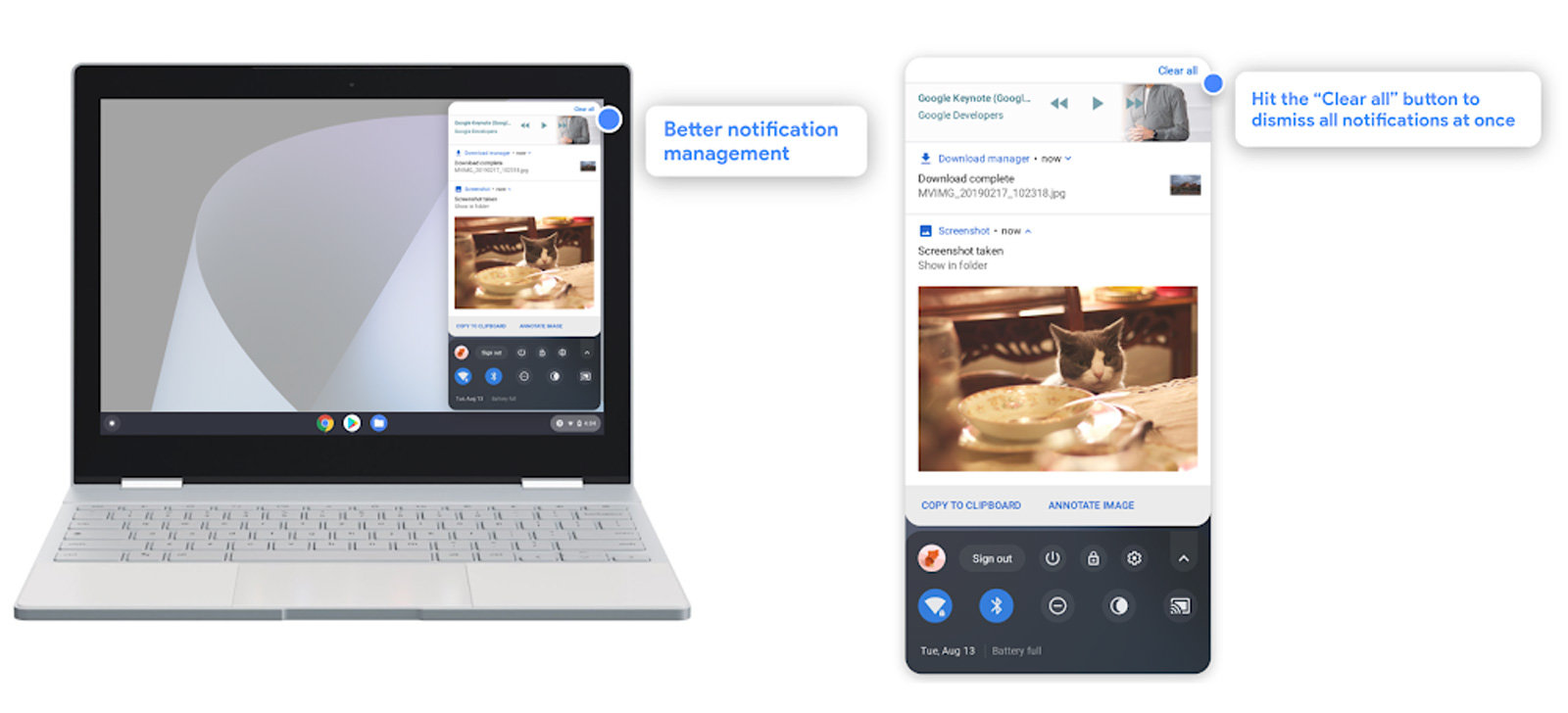
Returning to the update, the company has also tweaked the camera app’s interface to change how users switch between the different camera modes on their Chrome OS device. This latter enhancement is available on all Chrome OS devices, not just the Pixel Slate. The update also adds a new “Clear all” button to the notification shade to make it easier to manage Play Store prompts.
More so than any of the individual enhancements detailed above, what’s notable about Google’s August Chrome OS update is that the company devoted an entire blog post to it on its official Keyword blog. Even more significant is that at the end of the post Google promises to share information about its next Chrome OS update. It’s all part of a new, more transparent approach on the company’s behalf to talk about the development of Chrome OS that includes a new release notes feature. Google is rolling out Chrome OS 76 gradually, so hang tight if the update isn’t showing up on your Chromebook immediately.
For example, Amazon envisions the manufacturer of a WiFi-enabled indoor basketball hoop using Custom Interfaces to create an experience in which Alexa chimes in anytime you score a basket. In another potential scenario, Amazon suggests Alexa could work in tandem with a smart mini keyboard to teach you how to play the piano. Of course, as with any API, its potential is only as good as the developers working with it. It will be up to them to create interesting experiences with Amazon’s new tool, something that’s not a given.
Given Amazon’s recent privacy record, one worrisome aspect of the new API is that the company primarily envisions developers leveraging it to create games and smart toy experiences. In particular, those aimed at children. For what it’s worth, Amazon notes must such experiences must obtain the permission of a child’s parent to launch. The Custom Interfaces API is available for developers to try now, so it shouldn’t be long before we see whether it delivers fun and safe experiences.
What’s the holdup, given that its competitor Steam has offered cloud saves since 2008? CEO Tim Sweeney noted that its a manual process for the Epic store team, requiring them to save each individual game. All Ubisoft titles have supported cloud saves since their launch due to Uplay integration.
The games with cloud save support, which Epic added over the last month or so, include: Alan Wake, Close to the Sun, Darksiders III, Enter the Gungeon, Genesis Alpha One, GNOG, Hyperlight Drifter, Kingdom New Lands, Limbo, Moonlighter, Mutant Year Zero, Overcooked, Rebel Galaxy Outlaw, Sherlock Holmes: The Devil’s Daughter, The Sinking City, This War Of Mine and World War Z.
There’s another reason why Epic doesn’t just cloud save its entire library in one fell swoop. Epic has to work with developers of other released games to test cloud saves. It hopes to enable more games over time — and in the future, cloud saves will be enabled at launch.
But just because Amazon is one of the world’s richest companies doesn’t mean much of that gilding actually makes it down to the rank and file folks who make the machine run. If recent reports, such as John Oliver’s segment from July below are to be believed, working in one of the conglomerates’s many fulfillment centers can be a sisyphean task for both the feet and the bladder. Workers have been incited to strike, because their working conditions have been so “dehumanizing.” But that’s not how Amazon’s Fulfillment Center Ambassadors see it.
Amazon launched the FC Ambassador program in August 2018 as a means of managing its reputation online. The program asks full-time employees to go onto Twitter and share their experiences working at a fulfillment center. However, their timelines, which often sport gushing reviews of the job and #LovethatFCLife hashtags, rarely reflect the brutal conditions described by the NY Post.
So Amaz*n has set up an army of bot accounts, allegedly from workers at various fulfillment centers, whose sole purpose is to jump on tweets critical of their benevolent overlord with the same stale cant about great pay & benefits pic.twitter.com/Z7lJWUb7A0
“The most important thing is that they’ve been here long enough to honestly share the facts based on personal experience,” an Amazon spokesperson told Business Insider in 2018. “It’s important that we do a good job of educating people about the actual environment inside our fulfillment centers, and the FC Ambassador program is a big part of that along with the fulfilment center tours we provide.” For example, you have Carol from Kent, Washington. She’s been a picker since 2017 and enjoys “Movies, SciFi Books, Music, Gaming.” What she doesn’t enjoy is following any other accounts. Neither does Dylan. He’s a PIT Operator at the PHL4 center, loves “Sports, Music, Food and anything Louisiana” and is apparently the youngest looking 55 year old to ever walk the planet Earth — a point that did not go unnoticed.
Look how healthy and youthful that 55 year old man is. Amazon is clearly giving him a great stress-free life. pic.twitter.com/ENiEorwkdG
The FC Ambassador accounts are also oddly uniform in their behavior. All of the accounts are standardized with the same formatting, team members address nearly identical talking points, and they’ll quickly swarm in support of one another when getting resistance or pushback from average Twitter users as @rulesObeyer discovered on Wednesday.
Her negative response to an Amazon tweet inviting the public to go on a tour of their local fulfilment center unleashed a barrage of responses from no less than seven FC Ambassadors. By the end, the Ambassadors were attempting to prove their case by linking to the same fulfilment center tour post that set off the entire exchange. Unsurprisingly, Twitter was subsequently flooded with parody accounts after the thread went viral.
This isn’t the first time that the Ambassador program has been accused of shady dealings. In January, NYT tech correspondent Karen Weise noted that a number of accounts had been handed over to new employees.
“Nothing is wrong with my pay or conditions at Amazon. Everything is fine here. There was, uh, there was just a malfunction. We’re all fine at Amazon.
When asked for comment, Amazon released the following statement to Engadget: “FC ambassadors are employees who work in our FCs and share facts based on personal experience. It’s important that we do a good job educating people about the actual environment inside our fulfillment centers, and the FC ambassador program is a big part of that along with the FC tours we provide. This year alone, more than 100,000 guests have come to see for themselves what it’s like to work inside one of our FCs. If you haven’t visited, I recommend it.”
And thus, our story has begun snacking on its own tail with Amazon pitching a tour of its shipping warehouse as comment for a story about the fallout from Amazon pitching a tour of its shipping warehouse. But don’t worry, Amazon is already hard at work in its automation efforts and expects robots to be running its warehouses instead of us meat sacks in just ten (or) more years.
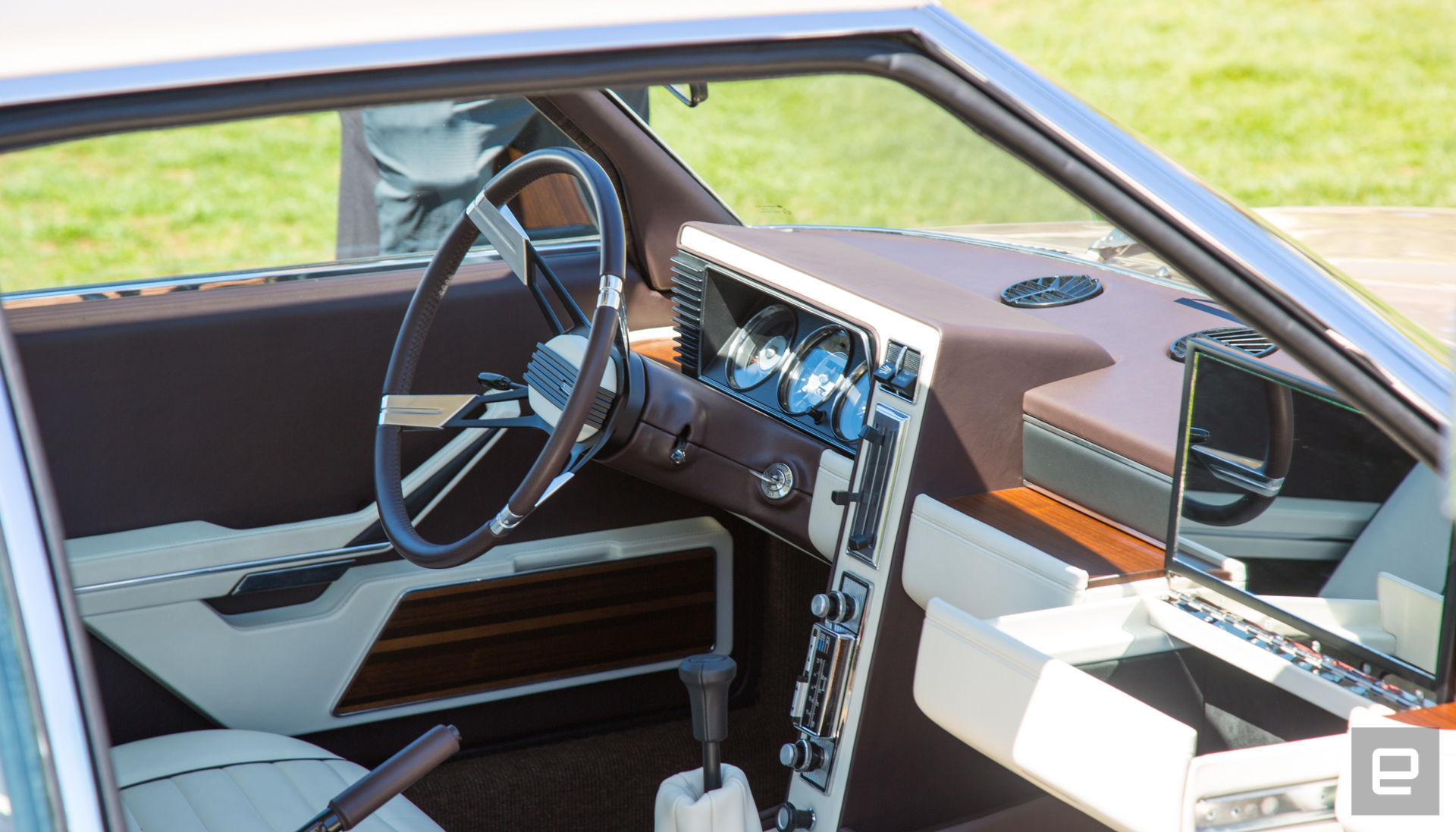
The Garmisch Bertone Concept made its premiere at the 1970 Geneva Auto Show, then it vanished. The vehicle was created as a provocation to the BMW group. It’s sleek design and bold kidney grill have been evident in the BMW line up for decades even though it vanished without a trace.
BMW’s head of design, Adrian van Hooydonk decided to bring it back. He reached out to the original designer Marcello Gandini who had drawings and memories and the automaker started using today’s technology to recreate a vehicle from the past.
The BMW design team initially created a 3D model of the vehicle in the computer then translated that to a clay model. At that point, they brought in Gandini who helped the team fine-tune the vehicle. An angle change here, a little bit more slope there.
Then the automaker built it. While it seems a little crazy to rebuild and show off an old concept car, the manufacturing process is an example of what can be accomplished thanks to the latest technology available. Without 3D printing, BMW would have had to build molds for most of the interior. A huge undertaking for something that’s not being used to show off the future.
The Garmisch was shown alongside the Vision M Next, the automaker’s futuristic take on its performance vehicles. It’s a world away from the 1970 concept vehicle, but the underlying technology needed to build that Vision M Next, is the same needed for the Garmisch.
And that’s not all! The streaming giant confirmed a third movie is on the way. In fact, To All The Boys: Always and Forever, Lara Jean is already in production. So, fans have two more movies to look forward to once they finish wearing out whatever the digital equivalent of a VHS tape is with their repeated TATBILB viewings.
#ToAllTheBoys: P.S. I Still Love You premieres February 12!
And a third film —To All The Boys: Always And Forever Lara Jean — is already in production!!! pic.twitter.com/EPfUYbOaKl
To flag false content, users will click the three-dot menu at the top right corner of an Instagram post, select “it’s inappropriate” and choose “false information.” If a post is indeed incorrect, it won’t be deleted, but it will be “downplayed” on the Explore tab and hashtag pages. The post creator won’t be notified when their content is under review, and they won’t know whether the fact-checker decides it’s false or not.
The Instagram posts will be reviewed by the same third-party fact-checkers that review flagged Facebook content. Facebook knows it has a fake news problem, and it’s been using third-party fact checkers for years. One of those companies, Full Fact, recently spoke out, saying Facebook’s fact checking algorithms need work. Facebook isn’t always quick to fight fake news — it took three years to address an issue in Moldova — and it’s had to defend its decision not to remove fake news from politicians. Letting users flag false Instagram posts may not change much in the short-term, but it could help Facebook build stronger detection tools.
The August 15th “Maisel Day” promo also offers 1959 prices for food, hotel stays, movie tickets and other common purchases, although it’s safe to say those didn’t create nearly as much trouble. Earlier campaigns, such a Carnegie Deli discount last winter, also went comparatively smoothly.
We’ve asked Amazon for comment. With that said, it won’t be surprising if the company is quietly thrilled with the extra publicity (yes, including news stories like this) that comes with the police intervention. Mrs. Maisel has 20 Emmy nominations ahead of the awards in September — Amazon is determined to remind people of that fact at every given opportunity. We’re just wondering if a gas station was the best choice, though. Amazon is already taking flak for its environmental policies, and encouraging people to produce more emissions won’t exactly improve its image.
The desktop app uses Plex’s revamped user interface, including the navigation sidebar. It also offers the same server and library management options as in the Plex web app.
Meanwhile, Plex is making some other changes to its desktop support. For one thing, it’s killing the old Windows app by removing it from the store as of today. In January, it’ll stop updating Plex Media Player. As a result of that, Plex is phasing out support for home theater PC setups.
“The long-term plan is for the new desktop app to replace Plex Media Player as our only desktop solution. The new desktop app is notably lacking TV mode, which means that we’re going to stop supporting the traditional HTPC setup (using a desktop computer connected to your TV or home theater) with this app,” the team wrote in a blog post. “It marks the end of an era for us, and we’d be lying if we said it wasn’t a little bittersweet.”
Plex said it made the call after monitoring how people used the app, and claimed “most of you will have an equal (if not better) experience with a streaming device and our new players.” It added that casting devices such as Chromecast, Fire TV, Roku and Apple TV use much less electricity than HTPC setups and are generally simpler to use.
The end of HTPC support might come as a blow to users who watch movies through a PC hooked up to a projector, particularly since Plex even used to position itself as a successor to Microsoft’s abandoned Windows Media Center.